
Offer details
Trade Prices
| Distributor | Product | SKU | Stock | Updated | Price |
|---|---|---|---|---|---|

|
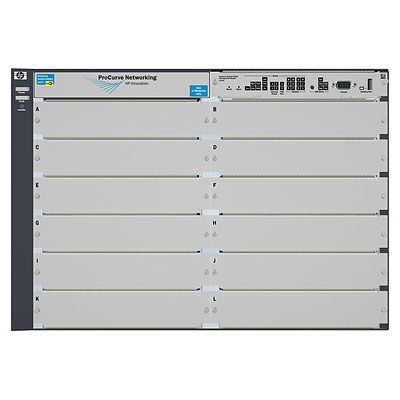
HP ProCurve 5412ZL chassis NO FAN |
J8698A |
Related Products
- Network Switch Components
- InfiniBand & Fibre Optic Cables
- Network Transceiver Modules
- Network Switch Modules
- Network Media Converters
- Power Supply Units
- Rack Accessories
- Maintenance & Support Fees
- Coaxial Cables
- Installation Services
- Signal Cables
- Networking Software
- Network Switches
-
 Category: Network Switch Components
 -
 Category: Network Switch Components
-
 Category: InfiniBand & Fibre Optic Cables
 -
 Category: InfiniBand & Fibre Optic Cables
 -
Category: InfiniBand & Fibre Optic Cables
-
 Category: InfiniBand & Fibre Optic Cables
 -
Category: InfiniBand & Fibre Optic Cables
-
 Category: Network Transceiver Modules
 -
 Category: Network Transceiver Modules
 -
 Category: Network Transceiver Modules
 -
 Category: Network Transceiver Modules
 -
 Category: Network Transceiver Modules
 -
 Category: Network Transceiver Modules
 -
 Category: Network Transceiver Modules
 -
 Category: Network Transceiver Modules
 -
 Category: Network Transceiver Modules
 -
 Category: Network Transceiver Modules
-
 Category: Network Switch Modules
 -
 Category: Network Switch Modules
 -
 Category: Network Switch Modules
 -
Category: Network Switch Modules
-
 Category: Network Switch Modules
 -
 Category: Network Switch Modules
 -
 Category: Network Switch Modules
 -
Category: Network Switch Modules
-
 Category: Network Switch Modules
 -
 Category: Network Switch Modules
 -
 Category: Network Switch Modules
-
 Category: Network Media Converters
 -
 Category: Network Media Converters
 -
 Category: Network Media Converters
 -
 Category: Network Media Converters
-
 Category: Power Supply Units
 -
 Category: Power Supply Units
-
 Category: Rack Accessories
 -
 Category: Rack Accessories
 -
 Category: Rack Accessories
 -
 Category: Rack Accessories
 -
 Category: Rack Accessories
 -
Category: Rack Accessories
-
 Category: Rack Accessories
-
 Category: Maintenance & Support Fees
-
 Category: Coaxial Cables
 -
 Category: Coaxial Cables


Description
The HP E5400 zl Switch Series consists of advanced intelligent switches in the HP E-Series product-line. The E5400 zl series includes 6-slot and 12-slot chassis and associated zl modules and bundles. The foundation for all of these switches is a purpose-built, programmable ProVision ASIC that allows the most demanding networking features, such as quality of service (QoS) and security, to be implemented in a scalable yet granular fashion. With 10/100, Gigabit Ethernet and 10 Gigabit Ethernet interfaces, choice of PoE+ & Non-PoE, integrated layer 3 features and HP allianceONE Solutions, the E5400 zl switches offer excellent investment protection, flexibility, and scalability, as well as ease of deployment, operation, and maintenance.
Quality of Service (QoS)
• Advanced classifier-based QoS: classifies traffic using multiple match criteria based on Layer 2, 3, and 4 information; applies QoS policies such as setting priority level and rate limit to selected traffic on a per-port or per-VLAN basis
Management
• Remote Intelligent Mirroring: mirrors selected ingress/egress traffic based on ACL, port, MAC address, or VLAN to a local or remote E8200, E6200, E5400, or E3500 switch anywhere on the network
Connectivity
• IEEE 802.3az Energy Efficient Etherent: Lowers power consumption in periods of low link usage. (Supported on v2 zl 10/100/1000 & 10/100 modules)
Performance
• High-speed/capacity architecture: 1 Tbps crossbar switching fabric provides intra-module and inter-module switching with 585.6 million pps throughput on the purpose-built ProVision ASICs
Resiliency and high availability
• Virtual Router Redundancy Protocol: allows groups of two routers to dynamically back each other up to create highly available routed environments
Layer 2 switching
• HP's switch meshing: dynamically load-balances across multiple active redundant links to increase available aggregate bandwidth
Layer 3 services
• User Datagram Protocol (UDP) helper function: allows UDP broadcasts to be directed across router interfaces to specific IP unicast or subnet broadcast addresses and prevents server spoofing for UDP services such as DHCP
Quality of Service (QoS)
• Advanced classifier-based QoS: classifies traffic using multiple match criteria based on Layer 2, 3, and 4 information; applies QoS policies such as setting priority level and rate limit to selected traffic on a per-port or per-VLAN basis
Management
• Remote Intelligent Mirroring: mirrors selected ingress/egress traffic based on ACL, port, MAC address, or VLAN to a local or remote E8200, E6200, E5400, or E3500 switch anywhere on the network
Connectivity
• IEEE 802.3az Energy Efficient Etherent: Lowers power consumption in periods of low link usage. (Supported on v2 zl 10/100/1000 & 10/100 modules)
Performance
• High-speed/capacity architecture: 1 Tbps crossbar switching fabric provides intra-module and inter-module switching with 585.6 million pps throughput on the purpose-built ProVision ASICs
Resiliency and high availability
• Virtual Router Redundancy Protocol: allows groups of two routers to dynamically back each other up to create highly available routed environments
Layer 2 switching
• HP's switch meshing: dynamically load-balances across multiple active redundant links to increase available aggregate bandwidth
Layer 3 services
• User Datagram Protocol (UDP) helper function: allows UDP broadcasts to be directed across router interfaces to specific IP unicast or subnet broadcast addresses and prevents server spoofing for UDP services such as DHCP
Specifications
| Ports & interfaces | |
|---|---|
| I/O ports | 12 open module slots; Supports a maximum of 48 10-GbE ports or 288 autosensing 10/100/1000 ports or 288 mini-GBICs, or a combination |
| Networking | |
| Networking standards | EN: EN55024, CISPR 24; ESD: IEC 61000-4-2; 4 kV CD, 8 kV AD; Radiated: IEC 61000-4-3; 3V/m; EFT/Burst: IEC 61000-4-4; 1.0 kV (power line), 0.5 kV (signal line); Surge: IEC 61000-4-5; 1 kV/2 kV AC; Conducted: IEC 61000-4-6; 3V; Power frequency magnetic field: IEC 61000-4-8; 1A/m, 50 or 60 Hz; Voltage dips and interruptions: IEC 61000-4-11; >95% reduction, 0.5 period; 30% reduction, 25 periods; Harmonics: EN61000-3-2, IEC61000-3-2; Flicker: EN61000-3-3, IEC61000-3-3 |
| Data transmission | |
| MAC address table | 10000 entries |
| Switching capacity | 645.6 Gbps |
| Protocols | |
| Supported network protocols | RFC 783 TFTP; RFC 2925 Ping MIB; RFC 951 BootP; RFC 1542 BootP; RFC 854 Telnet; RFC 768 UDP; RFC 792 ICMP; RFC 793 TCP; RFC 826 ARP; RFC 2030 Simple Network Time Protocol; IEEE 802.3x Flow Control; DHCP Relay; RFC 3046 DHCP Relay Agent Information Option 82; RFC 3376 IGMPv1/v2/v3; RFC 2453 RIPv2; RFC 2328 OSPFv2 (Premium Edge License); IGMPv3; IEEE 802.1D Spanning Tree; IEEE 802.1w Rapid Convergence Spanning Tree; IEEE 802.1s Multiple Spanning Trees; IEEE 802.3ad Link Aggregation Control Protocol; IEEE 802.1AB Link Layer Discovery Protocol; ANSI/TIA-1057 LLDP Media Endpoint Discovery (MED); RFC 2474 DiffServ Precedence; RFC 2597 DiffServ Expedited Forwarding (EF); RFC 2598 DiffServ Assured Forwarding (AF); RFC 1492 TACACS+; RFC 2138 RADIUS; RFC 2866 RADIUS accounting; SSHv2 Secure Shell; Secure Sockets Layer (SSL); IEEE 802.1X Network Login; 802.3af Power over Ethernet; IEEE 802.1Q VLAN tagging; IEEE 802.1Q GVRP; IEEE 802.1p Priority; SNMPv1/v2c/v3; HTML and telnet management; RFC 1493 Bridge MIB; PIM Dense Mode (Premium Edge License); PIM Sparse Mode (Premium Edge License); RFC 1213 MIB II; RFC 2096 IP Forwarding Table MIB; RFC 2737 Entity MIB; RFC 2863 Evolution of Interface; RFC 2665 Ethernet MIB; RFC 3768 VRRP (Premium Edge License); RFC 2787 VRRP MIB; RFC 1058 RIP; RFC 1724 RIPv2 MIB; RFC 2819 Four groups of RMON: 1 (statistics), 2 (history), 3 (alarm) and 9 (events); XRMON; UDLD (Uni-directional Link Detection); RFC 2021 RMON probe configuration (RMON v2); RFC 2668 802.3 MAU MIB; RFC 2613 SMON; RFC 2674 802.1p and IEEE 802.1Q Bridge MIB; RFC 1850 OSPF MIB; RFC 2618 RADIUS Client MIB; RFC 2620 RADIUS Accounting MIB; RFC 3101 OSPF NSSA; RFC 1519 CIDR; RFC 3046 DHCP Relay Agent Information Option; RFC 3176 sFlow |
| Sound emission | |
| Acoustic pressure emissions | Power: 64, Pressure: 57.5, ISO 7779, ISO 9296 dB |
| Design | |
| Safety | CSA 22.2 No. 60950; UL 60950; IEC 60950; EN 60950 |
| Form factor | 7U height |
| Electromagnetic compatibility | FCC Class A; VCCI Class A; EN 55022/CISPR 22 Class A |
| Rack mounting | Mounts in an EIA-standard 19 in. telco rack or equipment cabinet (hardware included); horizontal surface mounting only |
| Power | |
| Input voltage | 100-127 / 200-240 VAC |
| Power supply slots open | 4 |
| Technical details | |
| Form factor | 7U height |
| Rack mounting | Mounts in an EIA-standard 19 in. telco rack or equipment cabinet (hardware included); horizontal surface mounting only |
| Switch fabric speed | 691.2 Gbps |
| Heat dissipation note | (max. non-PoE); 7400 BTU/hr (7,807 kJ/hr) (max. using PoE) |
| Electromagnetic immunity | EN 55024, CISPR 24; IEC 61000-4-2; 4 kV CD, 8 kV AD; IEC 61000-4-3; 3 V/m; IEC 61000-4-4; 1.0 kV (power line), 0.5 kV (signal line); IEC 61000-4-5; 1 kV/2 kV AC; IEC 61000-4-6; 3 V; IEC 61000-4-8; 1 A/m, 50 or 60 Hz; IEC 61000-4-11; >95% reduction, 0.5 period; 30% reduction, 25 periods; EN 61000-3-2, IEC 61000-3-2; EN 61000-3-3, IEC 61000-3-3 |
| Certificates | |
| Safety | CSA 22.2 No. 60950; UL 60950; IEC 60950; EN 60950 |
| Electromagnetic compatibility | FCC Class A; VCCI Class A; EN 55022/CISPR 22 Class A |
| Operational conditions | |
| Storage temperature (T-T) | -40 - 70 °C |
| Storage relative humidity (H-H) | 15 to 95 @ 149°F |
| Operating temperature (T-T) | 0 - 55 °C |
| Operating relative humidity (H-H) | 15 to 95 @ 131°F |
| Operating altitude | 3 km |
| Heat dissipation | 4900 BTU/h |
| Weight & dimensions | |
| Weight | 15.85 kg |
| Other features | |
| Management platform | HP PCM+; HP PCM (included); command-line interface; Web browser; configuration menu; out-of-band management (serial RS-232C) |
| Latency | 1000 Mb Latency: < 3.7 µs (FIFO 64-byte packets); 10 Gbps Latency: < 2.1 µs (FIFO 64-byte packets) |
| Dimensions (WxDxH) | 450.9 x 444.5 x 307.3 mm |
| Power requirements | Chassis ships without power supplies. Four power supply slots are available; three different power supplies are available. See power supply products for additional specifications.; Power supplies must be ordered separately. Two power supplies are required to power the J8698A chassis. Heat dissipation does not include heat dissipated by the PoE-powered devices themselves. |
| Memory and processor | Gigabit Module: ARM9 @ 200 MHz, packet buffer size: 144 Mb QDR SDRAM; 10G Module: ARM9 @ 200 MHz, packet buffer size: 36 Mb QDR SDRAM; Management Module: Freescale PowerPC 8540 @ 666 MHz, 4 MB flash Mb, 128 MB compact flash, 256 MB DDR SDRAM |
| Input voltage | 100-127 / 200-240 VAC |
| Input frequency | 50 / 60 Hz |
| Switch fabric speed | 691.2 Gbps |
| Power supply slots open | 4 |
| I/O ports | 12 open module slots; Supports a maximum of 48 10-GbE ports or 288 autosensing 10/100/1000 ports or 288 mini-GBICs, or a combination |
| Heat dissipation note | (max. non-PoE); 7400 BTU/hr (7,807 kJ/hr) (max. using PoE) |
| Electromagnetic immunity | EN 55024, CISPR 24; IEC 61000-4-2; 4 kV CD, 8 kV AD; IEC 61000-4-3; 3 V/m; IEC 61000-4-4; 1.0 kV (power line), 0.5 kV (signal line); IEC 61000-4-5; 1 kV/2 kV AC; IEC 61000-4-6; 3 V; IEC 61000-4-8; 1 A/m, 50 or 60 Hz; IEC 61000-4-11; >95% reduction, 0.5 period; 30% reduction, 25 periods; EN 61000-3-2, IEC 61000-3-2; EN 61000-3-3, IEC 61000-3-3 |
| Acoustic pressure emissions | Power: 64, Pressure: 57.5, ISO 7779, ISO 9296 dB |

