





Offer details
Trade Prices
| Distributor | Product | SKU | Stock | Updated | Price |
|---|---|---|---|---|---|

|
HP 2910-24G-PoE+ al Switch |
J9146A |
Retail Prices
| Merchant | Product | Condition | Updated | Price |
|---|---|---|---|---|
| Amazon | New | £1,812.00 | ||
| Amazon | Used | £500.00 |
Related Products
- Network Media Converters
- Network Switch Modules
- Network Transceiver Modules
- IT Support Services
- Warranty & Support Extensions
- Installation Services
- Rack Accessories
- InfiniBand & Fibre Optic Cables
- Network Switch Components
- Power Supply Units
- Coaxial Cables
- Networking Cables
-
 Category: Network Media Converters
 -
 Category: Network Media Converters
-
 Category: Network Switch Modules
 -
 Category: Network Switch Modules
-
 Category: Network Transceiver Modules
 -
 Category: Network Transceiver Modules
 -
 Category: Network Transceiver Modules
 -
 Category: Network Transceiver Modules
 -
 Category: Network Transceiver Modules
 -
 Category: Network Transceiver Modules
 -
 Category: Network Transceiver Modules
-
 Category: IT Support Services
 -
Category: IT Support Services
-
Category: IT Support Services
-
Category: IT Support Services
-
Category: IT Support Services
-
Category: IT Support Services
-
Category: IT Support Services
-
Category: IT Support Services
-
Category: IT Support Services
-
Category: IT Support Services
-
Category: IT Support Services
-
Category: IT Support Services
-
Category: IT Support Services
-
Category: IT Support Services
-
 Category: Warranty & Support Extensions
 -
 Category: Warranty & Support Extensions
 -
Category: Warranty & Support Extensions
-
Category: Warranty & Support Extensions
-
Category: Warranty & Support Extensions
-
Category: Warranty & Support Extensions
-
Category: Warranty & Support Extensions
-
Category: Warranty & Support Extensions
-
Category: Warranty & Support Extensions
-
Category: Warranty & Support Extensions
-
Category: Warranty & Support Extensions
-
Category: Warranty & Support Extensions
-
Category: Warranty & Support Extensions
-
Category: Warranty & Support Extensions
-
Category: Warranty & Support Extensions
-
Category: Warranty & Support Extensions
-
Category: Warranty & Support Extensions
-
Category: Warranty & Support Extensions
-
Category: Warranty & Support Extensions
-
Category: Warranty & Support Extensions
-
Category: Warranty & Support Extensions
-
Category: Warranty & Support Extensions
-
Category: Warranty & Support Extensions
-
Category: Warranty & Support Extensions
-
Category: Warranty & Support Extensions
-
Category: Warranty & Support Extensions
-
Category: Warranty & Support Extensions
-
Category: Warranty & Support Extensions
-
Category: Warranty & Support Extensions
-
Category: Warranty & Support Extensions
-
 Category: Warranty & Support Extensions
 -
Category: Warranty & Support Extensions
-
 Category: Warranty & Support Extensions
 -
Category: Warranty & Support Extensions
-
Category: Warranty & Support Extensions
-
Category: Warranty & Support Extensions
-
Category: Warranty & Support Extensions
-
Category: Warranty & Support Extensions
-
Category: Warranty & Support Extensions
-
Category: Warranty & Support Extensions
-
Category: Warranty & Support Extensions
-
 Category: Rack Accessories
 -
 Category: Rack Accessories
 -
 Category: Rack Accessories
 -
 Category: Rack Accessories
 -
Category: Rack Accessories
-
Category: Rack Accessories
-
 Category: Rack Accessories
-
 Category: InfiniBand & Fibre Optic Cables
-
 Category: Network Switch Components

-
 Category: Coaxial Cables
 -
 Category: Coaxial Cables
-
 Category: Networking Cables
 -
 Category: Networking Cables
 -
 Category: Networking Cables
Description
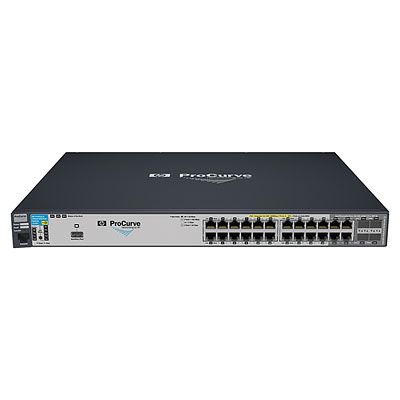
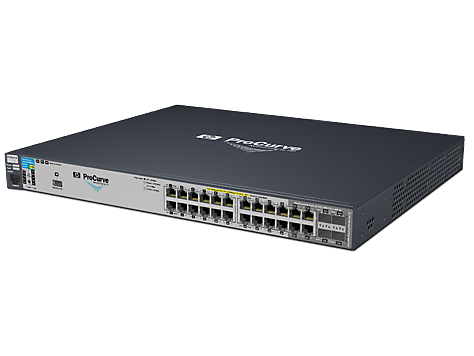
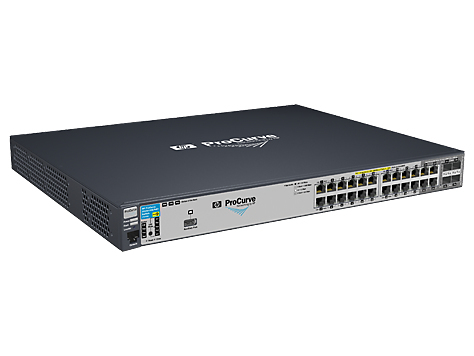
The HP 2910 al Switch Series consists of four switches: the HP 2910-24G al and 2910-24G-PoE+ al Switches with 24 10/100/1000 ports, and the HP 2910-48G al and 2910-48G-PoE+ al Switches with 48 10/100/1000 ports. Each switch has four dual-personality ports for 10/100/1000 or mini-GBIC connectivity. In addition, the 2910 al Switch Series supports up to four optional 10 Gigabit Ethernet (CX4 and/or SFP+) ports, thereby offering the most flexible and easy-to-deploy uplinks in its class. Together with static and RIP IPv4 routing, robust security and management, enterprise-class features, free lifetime warranty, and free software updates, the 2910 series is a cost-effective, scalable solution for customers who are building high-performance networks. These switches can be deployed at enterprise edge and remote branch offices, converged networks, and data center top of rack.
Features
Quality of Service (QoS)
- Traffic prioritization (IEEE 802.1p): allows real-time traffic classification into eight priority levels mapped to eight queues
- Layer 4 prioritization: enables prioritization based on TCP/UDP port numbers
- Class of Service (CoS): sets the IEEE 802.1p priority tag based on IP address, IP Type of Service (ToS), Layer 3 protocol, TCP/UDP port number, source port, and DiffServ
- Rate limiting: per-port ingress enforced maximums
Connectivity
- 10 Gbps Ethernet connectivity: up to four optional and flexible 10-Gigabit ports (CX4 and/or SFP+), with optional interconnect kit for short-distance connectivity
- IPv6: IPv6 host: allows the switches to be managed and deployed at the edge of IPv6 networks . Dual stack (IPv4/IPv6): provides transition mechanism from IPv4 to IPv6; supports connectivity for both protocols. MLD snooping: forwards IPv6 multicast traffic to the appropriate interface; prevents IPv6 multicast traffic from flooding the network.
- IEEE 802.3af Power over Ethernet (PoE): provides up to 15.4 W per port to IEEE 802.3af-compliant PoE-powered devices such as IP phones, wireless access points, and security cameras
- IEEE 802.3at Power Over Ethernet Plus: provides up to 30 W per port to IEEE 802.3 for PoE/PoE+ powered devices such as video IP phones, IEEE 802.11n wireless access points, and advanced pan/zoom/tilt security cameras
- Pre-standard PoE support: detects and provides power to pre-standard PoE devices
Performance
- High-performance architecture: 128 Gbps switching fabric with up to 95 Mpps (24-port switches) and 176 Gbps switching fabric with up to 131 Mpps (48-port switches)
- Selectable queue configurations: allow you to increase performance by selecting the number of queues and associated memory buffering that best meet the requirements of your network applications
Resiliency and high availability
- IEEE 802.1s Multiple Spanning Tree: provides high link availability in multiple VLAN environments by allowing multiple spanning trees; provides legacy support for IEEE 802.1d and IEEE 802.1w
- IEEE 802.3ad Link Aggregation Protocol (LACP) and HP port trunking: support up to 24 trunks, each with up to 8 links (ports) per trunk
- Optional redundant power supply: supplies backup power in case of power failure (note: HP E620 Redundant/External Power Supplyprovides only RPS functionality)
Manageability
- RMON, XRMON, and sFlow: provide advanced monitoring and reporting capabilities for statistics, history, alarms, and events
- Uni-Directional Link Detection (UDLD): monitors a link between two switches and blocks the ports on both ends of the link if the link goes down at any point between the two devices
- Command authorization: leverages RADIUS to link a custom list of CLI commands to an individual network administrator's login; also provides an audit trail
- Dual flash images: provides independent primary and secondary operating system files for backup while upgrading
- Multiple configuration files: allow multiple configuration files to be stored to a flash image
Layer 2 switching
- VLAN support and tagging: supports IEEE 802.1Q (4,094 VLAN IDs) and 256 VLANs simultaneously
- GARP VLAN Registration Protocol: allows automatic learning and dynamic assignment of VLANs
- Jumbo packet support: supports up to 9220-byte frame size to improve the performance of large data transfers
- IEEE 802.1v protocol VLANs: isolate select non-IPv4 protocols automatically into their own VLANs
Layer 3 routing
- Static IP routing: provides manually configured routing; includes ECMP capability
- Routing Information Protocol (RIP): provides RIPv1 and RIPv2 routing
Features
Quality of Service (QoS)
- Traffic prioritization (IEEE 802.1p): allows real-time traffic classification into eight priority levels mapped to eight queues
- Layer 4 prioritization: enables prioritization based on TCP/UDP port numbers
- Class of Service (CoS): sets the IEEE 802.1p priority tag based on IP address, IP Type of Service (ToS), Layer 3 protocol, TCP/UDP port number, source port, and DiffServ
- Rate limiting: per-port ingress enforced maximums
Connectivity
- 10 Gbps Ethernet connectivity: up to four optional and flexible 10-Gigabit ports (CX4 and/or SFP+), with optional interconnect kit for short-distance connectivity
- IPv6: IPv6 host: allows the switches to be managed and deployed at the edge of IPv6 networks . Dual stack (IPv4/IPv6): provides transition mechanism from IPv4 to IPv6; supports connectivity for both protocols. MLD snooping: forwards IPv6 multicast traffic to the appropriate interface; prevents IPv6 multicast traffic from flooding the network.
- IEEE 802.3af Power over Ethernet (PoE): provides up to 15.4 W per port to IEEE 802.3af-compliant PoE-powered devices such as IP phones, wireless access points, and security cameras
- IEEE 802.3at Power Over Ethernet Plus: provides up to 30 W per port to IEEE 802.3 for PoE/PoE+ powered devices such as video IP phones, IEEE 802.11n wireless access points, and advanced pan/zoom/tilt security cameras
- Pre-standard PoE support: detects and provides power to pre-standard PoE devices
Performance
- High-performance architecture: 128 Gbps switching fabric with up to 95 Mpps (24-port switches) and 176 Gbps switching fabric with up to 131 Mpps (48-port switches)
- Selectable queue configurations: allow you to increase performance by selecting the number of queues and associated memory buffering that best meet the requirements of your network applications
Resiliency and high availability
- IEEE 802.1s Multiple Spanning Tree: provides high link availability in multiple VLAN environments by allowing multiple spanning trees; provides legacy support for IEEE 802.1d and IEEE 802.1w
- IEEE 802.3ad Link Aggregation Protocol (LACP) and HP port trunking: support up to 24 trunks, each with up to 8 links (ports) per trunk
- Optional redundant power supply: supplies backup power in case of power failure (note: HP E620 Redundant/External Power Supplyprovides only RPS functionality)
Manageability
- RMON, XRMON, and sFlow: provide advanced monitoring and reporting capabilities for statistics, history, alarms, and events
- Uni-Directional Link Detection (UDLD): monitors a link between two switches and blocks the ports on both ends of the link if the link goes down at any point between the two devices
- Command authorization: leverages RADIUS to link a custom list of CLI commands to an individual network administrator's login; also provides an audit trail
- Dual flash images: provides independent primary and secondary operating system files for backup while upgrading
- Multiple configuration files: allow multiple configuration files to be stored to a flash image
Layer 2 switching
- VLAN support and tagging: supports IEEE 802.1Q (4,094 VLAN IDs) and 256 VLANs simultaneously
- GARP VLAN Registration Protocol: allows automatic learning and dynamic assignment of VLANs
- Jumbo packet support: supports up to 9220-byte frame size to improve the performance of large data transfers
- IEEE 802.1v protocol VLANs: isolate select non-IPv4 protocols automatically into their own VLANs
Layer 3 routing
- Static IP routing: provides manually configured routing; includes ECMP capability
- Routing Information Protocol (RIP): provides RIPv1 and RIPv2 routing
Specifications
| Management features | |
|---|---|
| Switch type | Managed |
| Web-based management | Yes |
| Quality of Service (QoS) support | Yes |
| Multicast support | Yes |
| Switch layer | L3 |
| Ports & interfaces | |
| Basic switching RJ-45 Ethernet ports quantity | 24 |
| Basic switching RJ-45 Ethernet ports type | Gigabit Ethernet (10/100/1000) |
| Installed SFP modules quantity | 0 |
| Installed SFP+ modules quantity | 0 |
| Console port | RJ-45 |
| Copper ethernet cabling technology | 10BASE-T, 100BASE-TX, 1000BASE-T |
| Network | |
| Auto-sensing | Yes |
| Copper ethernet cabling technology | 10BASE-T, 100BASE-TX, 1000BASE-T |
| Networking standards | IEEE 802.3, IEEE 802.3ab, IEEE 802.3u |
| Full duplex | Yes |
| VLAN support | Yes |
| Spanning tree protocol | Yes |
| Routing entries | 2000 |
| Rate limiting | Yes |
| Port mirroring | Yes |
| Link aggregation | Yes |
| IP routing | Yes |
| Auto MDI/MDI-X | Yes |
| 10G support | Yes |
| IGMP snooping | Yes |
| Data transmission | |
| Throughput | 95 Mpps |
| Latency (1 Gbps) | 2.9 µs |
| Latency (10 Gbps) | 1.3 µs |
| Packet buffer memory | 6 MB |
| MAC address table | 16000 entries |
| Switching capacity | 128 Gbit/s |
| Jumbo frames support | Yes |
| Security | |
| SSH/SSL support | Yes |
| MAC address filtering | Yes |
| IGMP snooping | Yes |
| Access Control List (ACL) | Yes |
| DHCP features | DHCP server |
| Multicast features | |
| Multicast support | Yes |
| Design | |
| Safety | EN 60950/IEC 60950; CAN/CSA 22.2 No. 60950; EN 60825; UL 60950. |
| Form factor | 1U |
| Product colour | Grey |
| Stackable | Yes |
| Electromagnetic compatibility | FCC part 15 Class A; EN 55022/CISPR-22 Class A; VCCI Class A. |
| Rack mounting | Yes |
| Performance | |
| Processor frequency | 515 MHz |
| Memory type | SDRAM |
| Internal memory | 512 MB |
| Flash memory | 4 MB |
| Built-in processor | Yes |
| Processor model | ARM11 |
| Packet buffer memory | 6 MB |
| Stackable | Yes |
| Power | |
| AC input voltage | 100 - 240 V |
| AC input frequency | 50 - 60 Hz |
| Power consumption (typical) | 490 W |
| Input current | 3.1 - 6.1 A |
| Power over Ethernet (PoE) | |
| Power over Ethernet (PoE) | Yes |
| Operational conditions | |
| Storage temperature (T-T) | -40 - 70 °C |
| Storage relative humidity (H-H) | 15 - 95% |
| Operating temperature (T-T) | 0 - 55 °C |
| Operating relative humidity (H-H) | 15 - 95% |
| Heat dissipation | 447 BTU/h |
| Virtual LAN features | |
| VLAN support | Yes |
| Weight & dimensions | |
| Width | 365.8 mm |
| Depth | 442 mm |
| Height | 43.9 mm |
| Weight | 5.6 kg |
| Technical details | |
| Form factor | 1U |
| Product colour | Grey |
| Stackable | Yes |
| Processor frequency | 515 MHz |
| Rack mounting | Yes |
| Built-in processor | Yes |
| Certificates | |
| Safety | EN 60950/IEC 60950; CAN/CSA 22.2 No. 60950; EN 60825; UL 60950. |
| Electromagnetic compatibility | FCC part 15 Class A; EN 55022/CISPR-22 Class A; VCCI Class A. |
| Memory | |
| Packet buffer memory | 6 MB |
| Memory type | SDRAM |
| Internal memory | 512 MB |
| Flash memory | 4 MB |